
Consulting/Design
Bellow is a loose layout of the kinds of things that get covered in a design process

Landscape & Ecosystem Design
Our Human Habitat Design starts with a goal articulation and visioning process in order to elaborate on the wants and needs of the project. It is important also at this stage to discover the primary motivator and discover the important elements that we want place within the design.
The second phase includes surveying the site. For example, we look at the way the water is currently moving over the property and check what is currently on site with regard to fauna, flora, access, and already built structures. In this phase, it’s also good to learn and expand the clients understanding of the local bioregion, including useful plant and animal species naturally abundant, as well as weather patterns, sun angle, and common challenges to overcome relevant to site specific microclimates with regard to ecosystem diversity and home maintenance.
The 3rd stage is to run some assessments such as an input and output assessment and zone and or sector analysis and place challenges & solutions in order of priority. An example of inputs and outputs, might simply be resources coming to and from the property, analyzing what resources are readily available, such as wood chips for increased fertility. Sector analysis, is analyzing things such as predominant summer/winter wind directions, sun arc at different times to the year and, driving rain direction.
The 4th stage is when the design commences and we try to figure out what kind of habitat is practical for the site. At this point, we’ll consider all the available options for ponds, cisterns, construction, landscaping and what possibilities there are for solar, micro-hydro, or other evolving technologies.
A cyclical design process of continuous forecasting, evaluation, and tweaking is established that keeps the project moving efficiently in the right direction.
The Dream Scenario
Charlie’s dream project would consist of a conventional and sustainable building hybrid, surrounded by agroforestry and when relevant, terraced, rainwater harvesting silvopasture/food savannah system, using both plants and factoring the patterns of wild animals to complete optimal nutrient cycling. These systems sequester the most carbon, regenerating the planet by both improving soil fertility locally, and mitigating climate change globally.
Food Systems when applicable
Regenerative Developments specialises in food production based on a philosophy of working with, rather than against nature – aka Permaculture.
Biomimicry is all the rage in many aspects of today’s world, from microtechnology to economics. Food forests (aka forest gardens), and food savannahs are agriculture’s version of biomimicry, which, where appropriate, become the most productive and regenerative forms of food production.
Food Forest/Forest Garden(aka Multi Strata Agroforestry)
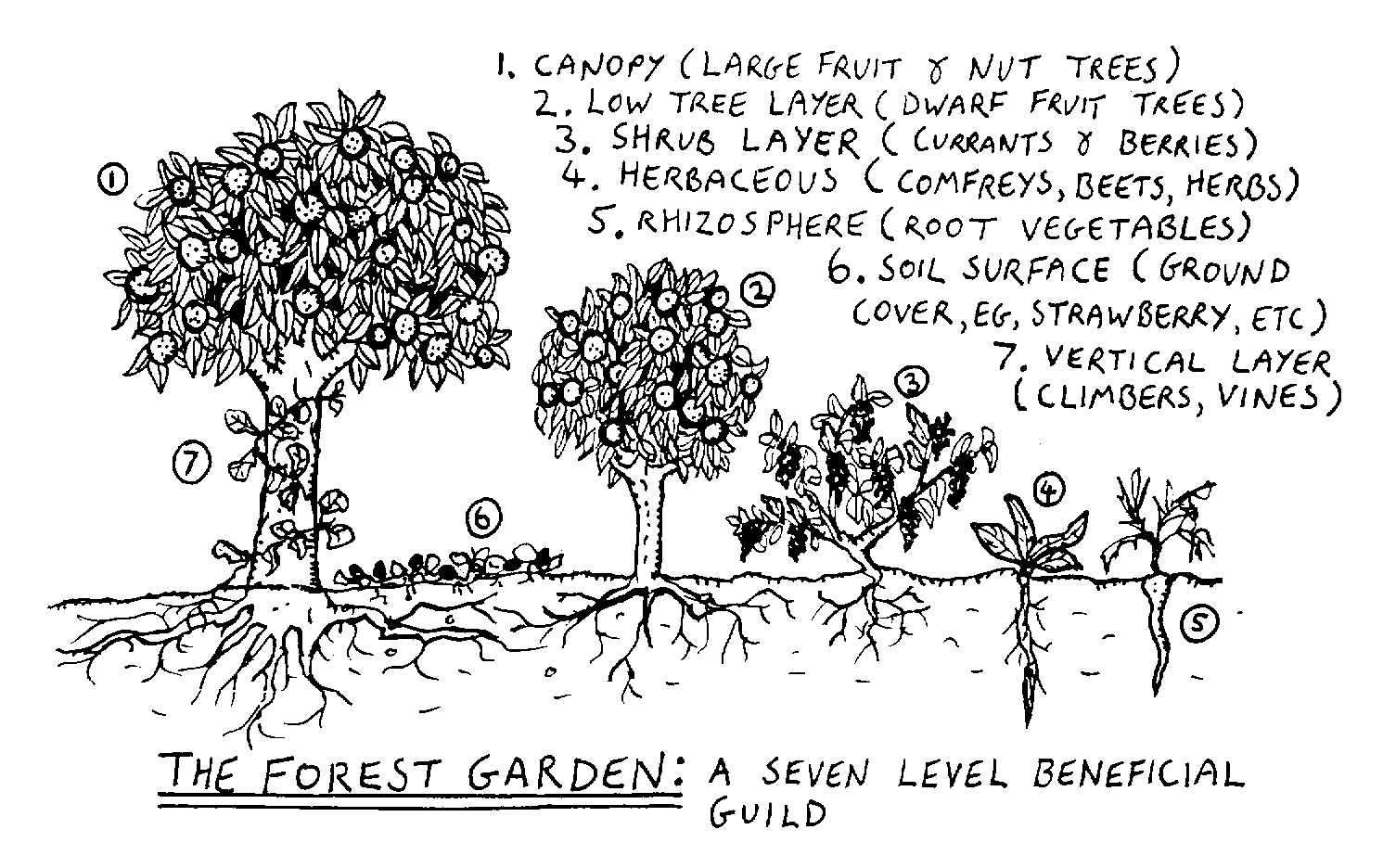
A food forest is a simple no-till (the earthworms, the harvesting of root crops, and the death of old trees do the tilling) multi storied systems of food and other useful products (medicines, flowers, timber), which while being managed with a ‘working with nature philosiphy’, benefit from the largest possible bio diversity (for example 90% of insects in a garden are either beneficial or completely harmless, and the more diversity, the less chance of any single species being problematic) to produce low input, high output food production.
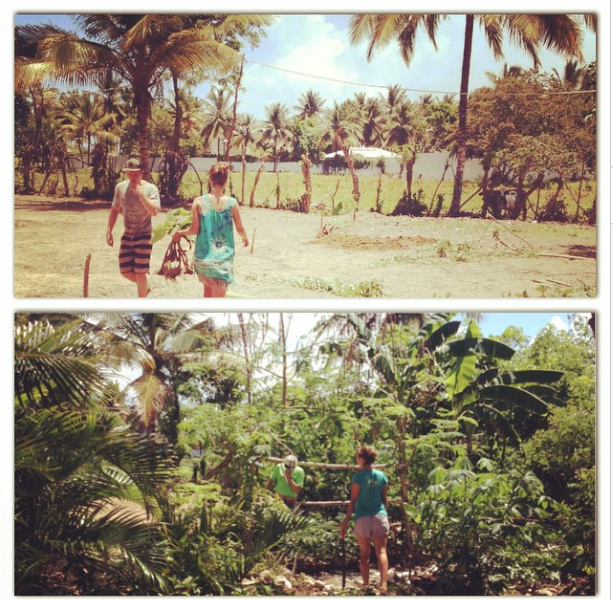
See a food forest tour by Charlie at Taino Organic Farm in the Dominican Republic in 2014.
The Mariposa Food Forest, Day 1 and Day 500 (approx.)
Food Savannah
 Mark Shepard’s Farm in Viola Wisconsin! Perhaps the premier example of a food Savannah or what he calls ‘Restoration agriculture’
A ‘Food Savannah’ can be similar to a food forest yet with less of a closed canopy. In the openings between trees (which are usually planted on swale mounds close to the natural contour so as to catch, spread, sink and then store the water in the soil and ponds), organic crops are grown, or animals such as cattle are raised in a system called ‘silvopasture’. If cattle or other ungulates are raised they will be managed in a way that’s known as ‘Holistic Management’ or “Mob Stock Grazing”. This method mimics the natural herding tendencies of ungulates in the wild. They generally migrate in large herds that are kept tight by predatory animals. Instead of predatory animals, the most common method is solar power net electric fences. In doing so, the herds or ‘mobs’ spend anywhere from a few hours to a few days in any given area eating, imprinting their hooves and fertilising before moving on and giving the paddock a chance to fully regenerate. This method, when accompanied with appropriate water management and subsoil ploughing, is known to be one of the fastest ways of building soil and sequestering carbon (carbon farming).
For a full and compressive understanding of Food Savannah Agriculture or ‘Restoration Agriculture’, this presentation by Mark Shepard is a great resource!
This video is a very brief introduction to Holistic Management.
 Taino Fam’s Sketch Design from 2012
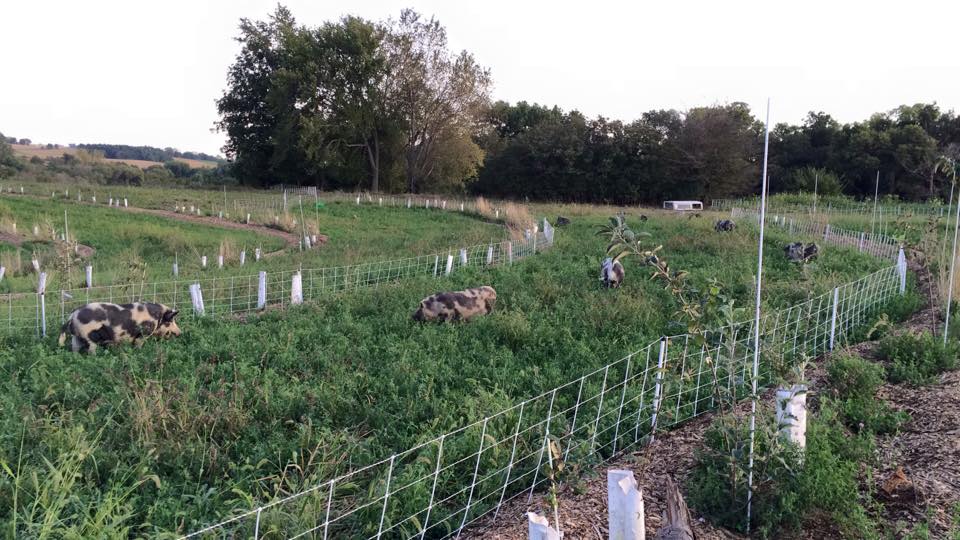 Food Savannah with Pigs doing their share of the Carbon Sequestration, Notice the temporary electric fences to keep the pigs in the paddock, away from the fruit tree beds and in the pasture for a few days in each section.
Earthworks
Whenever there is a budget for earthworks and the site is appropriate, earthworks are encouraged. As well as creating a level building site, machines can be used for the formation of swales, ditches, ponds/dams and terraces. The reason for doing this is that we can optimise the water absorption and storage capacity of the site as well as soil building and carbon sequestering potential while creating beneficial microclimates and wildlife habitats. The Ancient Incas knew full well the return on investment from earthworks; They would build it all by hand because they knew the increased yields over time far outweighed the efforts to create them. Today we have readily available excavators which we can utilise the leftovers of the oil age to create land healing shapes that will continue to do their job sequestering carbon and promoting life until the glaciers scar them back to bedrock in the next ice age.
Fertigation
A huge amount of the design process involves managing water so that it is stored when we don’t need it, and utilized when we do. This water management system is generally known as keyline design.
Through making creative add on’s we can also have our irrigation system fertilize at the same time hence ‘fertigation’. Imagine having ponds gravity feed into pools, that we let ducks play in and then use the fertilized water to gravity feed our apple trees..? This is what we mean when we say ‘Working with nature’
In this introductory piece, we have only touched the surface of how we intend to save you time and money for generations via being a part of the development of your project. Please get in touch if you have any further questions or would like to receive information about rates and potential booking for the 2016 season. 6047418325 or regenerativedevelopments@gmail.com.
For more Permaculture info, Check out the Playlists on The Youtube Chanel.
 Regenerative Developments - Habitats For Thriving