
It’s been said by some that the indigenous of the Pacific Northwest developed some of the most complex non agricultural societies on the planet, and it’s hypothesized that this can be largely attributed to the natural abundance of the region, as well as through their advance systems of regenerative land management, and intertidal zone stewardship.
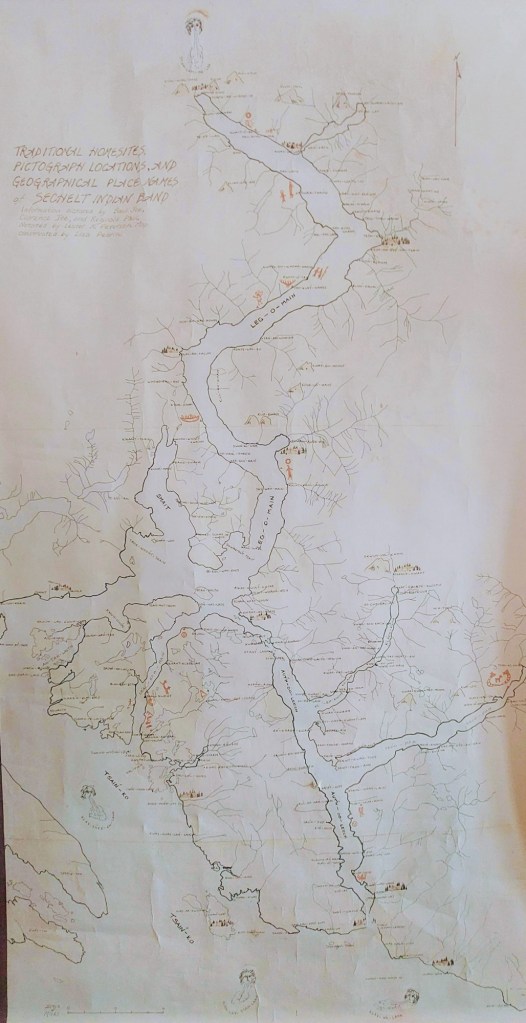
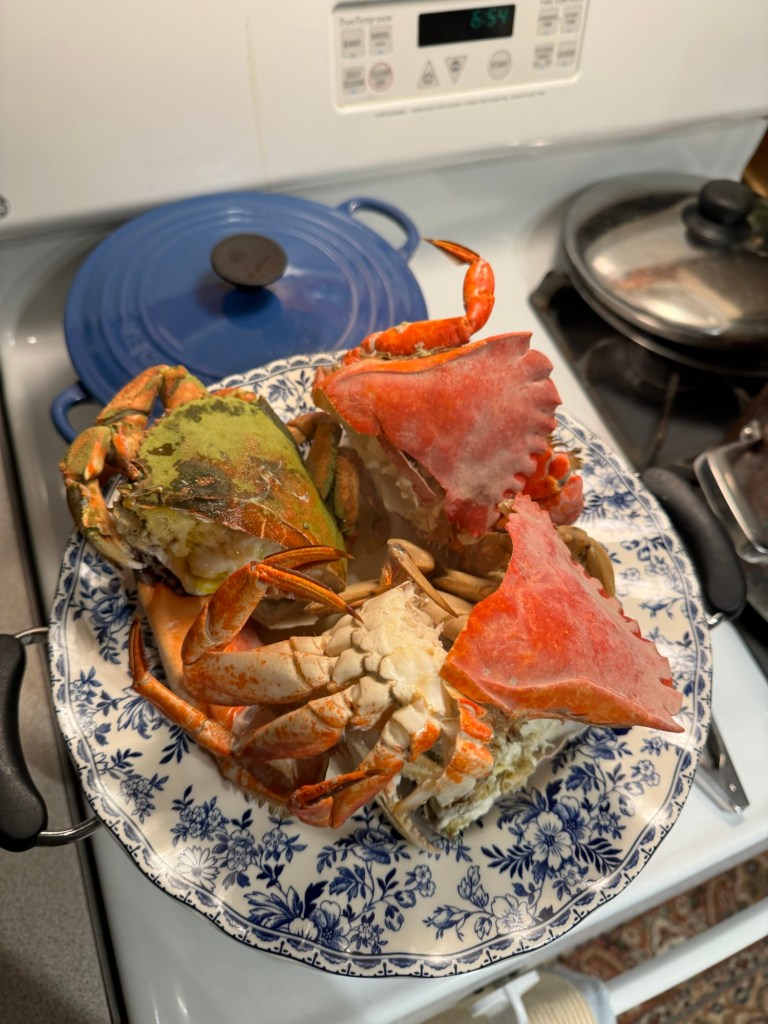
While the most plentiful natural food resource around here realistically come from animals in the form of oceanic and land mammals, as well as salmon; herring; eulachon, lingcod, rock cod, kelp greenling, crabs, oysters and clams etc; plant foods and medicines of the lands complete this seemingly perfect diet.

This article aims to be a simplified overview of some of the common and useful plants in the local ecosystem and also talk about a few of their non native cousins, within their plant families that easily thrive here in our gardens, and provide us with nutrition, medicine and many other uses.
First thing to note about this area is the physical geography. The ground its self is fairly void of topsoil. Glaciation carved away most of soil all the way to granite bedrock during the last ice age. Secondly, the heavy rains that mostly fall in the winter months further leach nutrients away from the thin soil layer, and since they fall in the dormant season for plants, they don’t help as much as we’d like with plant growth. Some people are curious to learn that in much of the region most of the tree growth actually occurs in the spring and fall, and the trees go somewhat dormant both in winter but also mid summer when water is scarce.

Due to a lack of typical summer rains and topsoil, the thick deciduous dominant forests that would be found in similar latitudes elsewhere in the world like Western Europe or North America’s East Coast, don’t fair well here. Instead it is the drought tolerant conifers that dominate.
The summer droughts here play a huge factor in why conventional agriculture doesn’t thrive here without irrigation, and perhaps a factor why annual agriculture wasn’t really developed here in the same way as it was in Western Europe, the Fertile Crescent, Central America and Parts of Asia approximately 12,000 years ago.
Despite the lack of soil and summer rain, the natural flora and fauna provides an astounding abundance of food and nutrition to those that know what to look for. The indigenous of this region have managed this ecosystem, farming in their own way, by favouring more abundant food producing systems for at least as long as annual agriculture and animal husbandry had been practiced elsewhere in the world, and some say, for significantly longer. This region is ideal for developing food forest/food Savanah style systems.
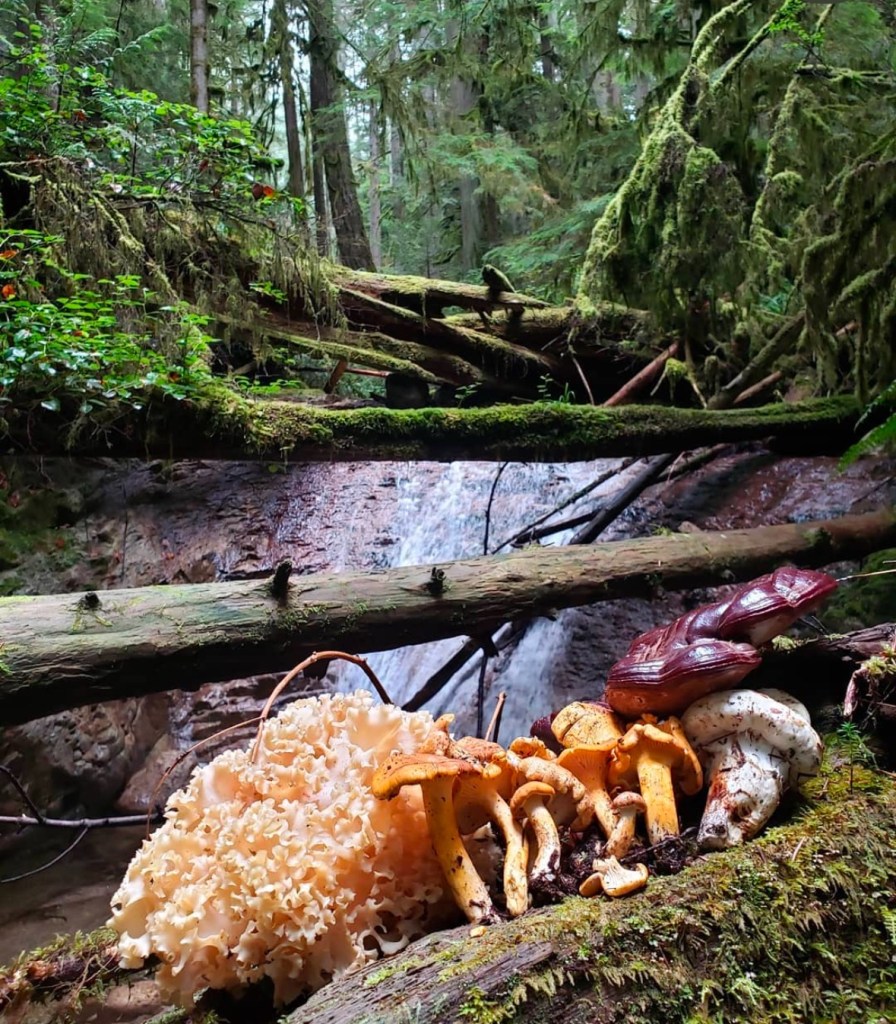
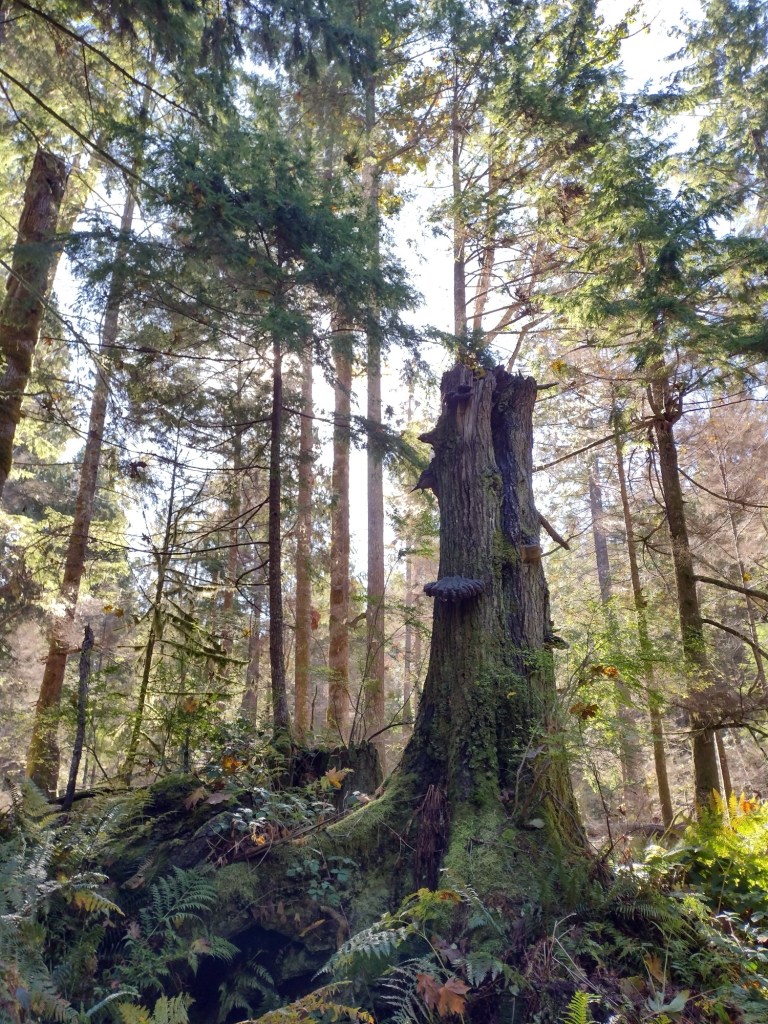
The climax community (The ecosystem arrived at over time; if there is no disruption, whether that be by Fire, floods, landslides, or intervention by humans) here consists mostly of an over-story of Douglas fir (Pinaceae Pseudotsuga menziesii)), Western Red Cedar (Cupressaceae Thuja Plicata), and Western Hemlock (Pinaceae Tsuga heterophylla) with an understory of Sword Ferns (Dryopteridaceae Polystichum munitum), Salal (Ericaceae Gaultheria shallon), Oregon Grape (Berberidaceae Berberis aquifolium) and Red Huckleberry (Ericacae Vaccinium parvifolium), and of course an abundance of seasonal mushrooms under that in the fall.
The edge and succession ecosystem are the part of the ecosystem that is either found at the edges where a forest meets a body of water, a meadow, or a disturbance such as a landslide. Most often of course today it’s where a forest meets a manmade disturbance such as a clear-cut or a road. After disturbance, succession begins with pioneer species that grow in and start the process of turning what might be a gravel landslide, or bare earth and begin the process of building soil for plants further along in succession (on a journey back towards the climax community)
Red Alder (Betulaceae Alnus rubra) with it’s symbiotic relationship with bacteria housed within it’s root system is a potent nitrogen fixer. It helps to lay the foundation for prosperity for all plants that come after it. Interestingly, nitrogen, or lack of it, can often be the limiting factor in tree growth at times of year when water is abundant and there is sufficient sunshine. So much so, that in some situations, good salmon years can be identified in tree rings, because the salmon carcasses which are high in nitrogen are spread by animals, and then further by mycelium, and it results in greater tree growth in those years.
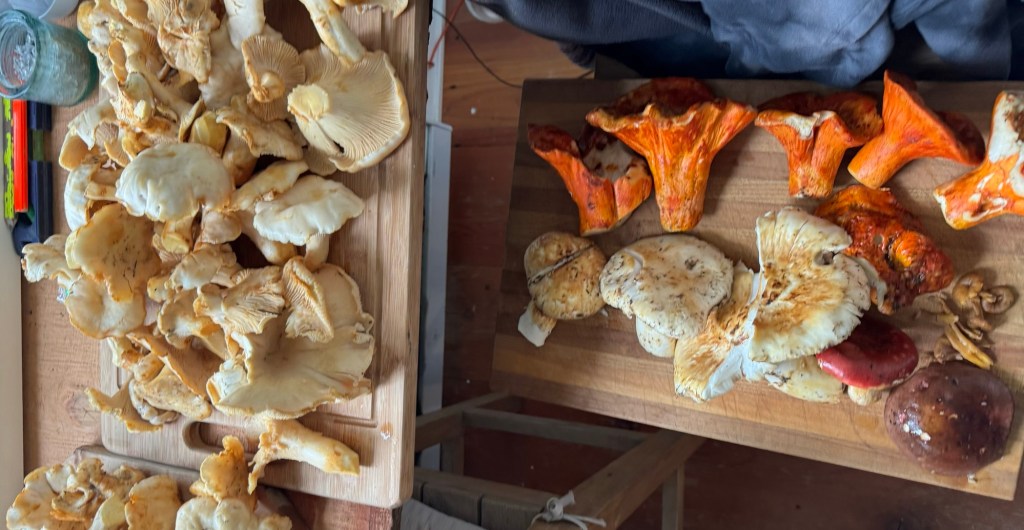
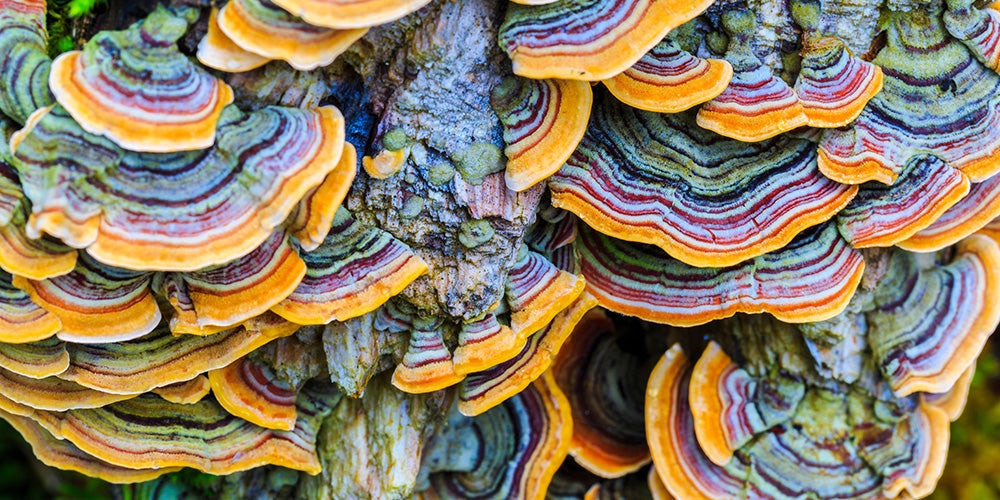
At the end of its life, Alder, with its high sugar content also becomes great food for mycelium, specifically edible oyster mushrooms (Pleurotus pulmonarius) and medicinal turkey tail mushrooms (Trametes versicolor)


Other succession and edge species include various Maples (Tree from the Sapindacae/Soapberry family and Acer Genus), Gary Oaks (Fagaceae Quercus garryana), Chokecherry (Rosaceae Prunus virginiana), Hazelnut (Betulacea Corylus cornuta), Elderberry (Adoxaceae Sambucus Racemosa), Salmonberry (Rosaceae Rubus spectabilis), Thimbleberry (Rosaceae Rubus parviflorus) and wild blackberries the native variety being the trailing blackberry (Rosacae Rubus ursinus), Wild Blackcurrants (Grossulariaceae Ribes americanum) and Wild Strawberries (Rosacae Fragaria vesca).


Many edges and medow ecosystems, specifically the low altitude meadow ecosystems were intentionally maintained by controlled burns and (in some places the practice is being reestablished, since much of these practices were lost in the era of residential schools), this practice promotes grasses, that encourage deer to come out in to the open to graze, which makes for easy hunting, aswell as creating ideal conditions for edible tubas such as Blue Camas (Asparagaceae Camassia qua-mash). These meadows also tend to be full of flowers throughout the spring and summer.
If we also include the coastal ecosystem, we can’t forget Arbutis (Ericaceae Arbutus menziesii), Crab Apple (Rosacea Malus fusca) and Nootka Rose (Rosacea Rosa nutkana), and if we include the subalpine we then have mountain huckleberries (Ericacea Vaccinium membranaceum) and countless other flowering plants.

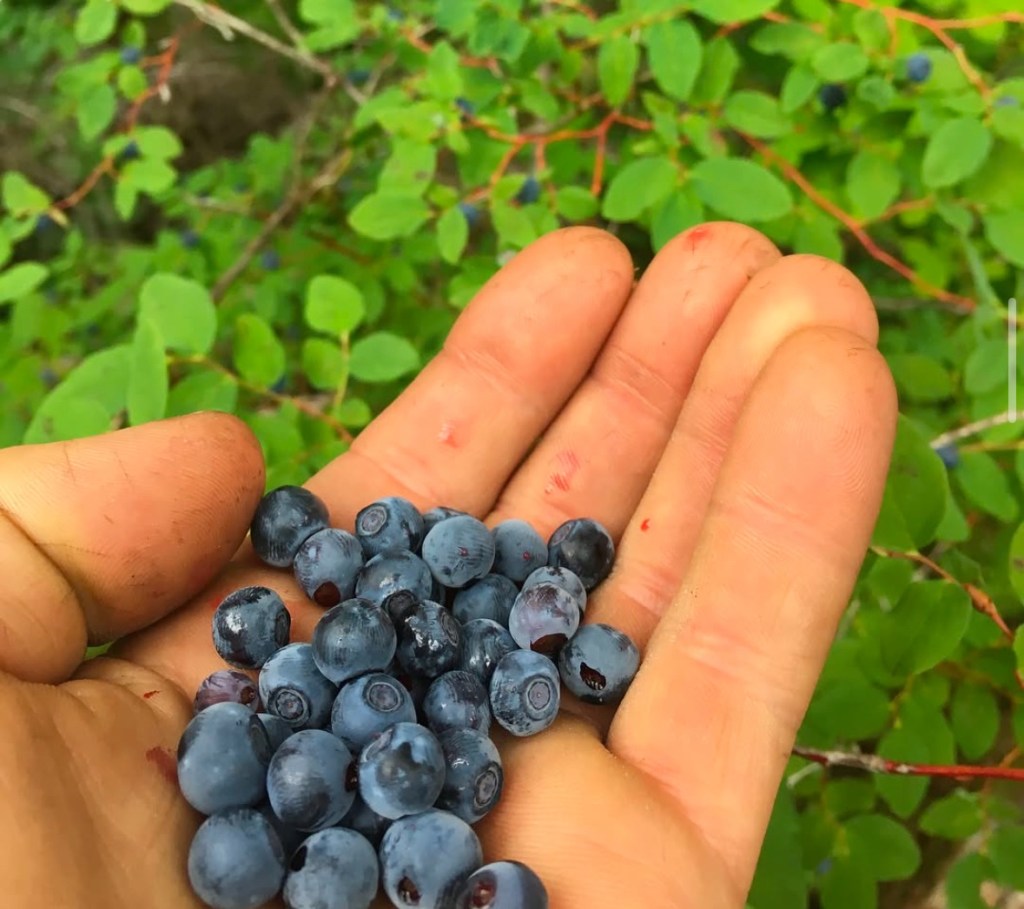
It truly is incredible that the majority of the common plants that grow here have at least edible parts to them at certain times of the year, and so the basics of a nutritious and interactive landscape can start simply by acknowledging and supporting what is already growing here without any human intervention.
When we broaden the diversity of our landscapes around our home and start to include all of the above, regardless of the elevation and proximity to the ocean of our specific property, we already have a phenomenal food producing garden. When we start to add in some not so distant cousins to these native plants we quickly set the stage for abundance in the nutrition department. We can bring in raspberries where salmon berries thrive, and apples where crab apples thrive and all different types of prunus species such as plums and apricots where chokecherries effortlessly grow.
Of course, as we get more ‘exotic’ we do also begin to become more of a target to deer and so fencing becomes essential and irrigation preferred, but still a fairly easy garden to grow and maintain.
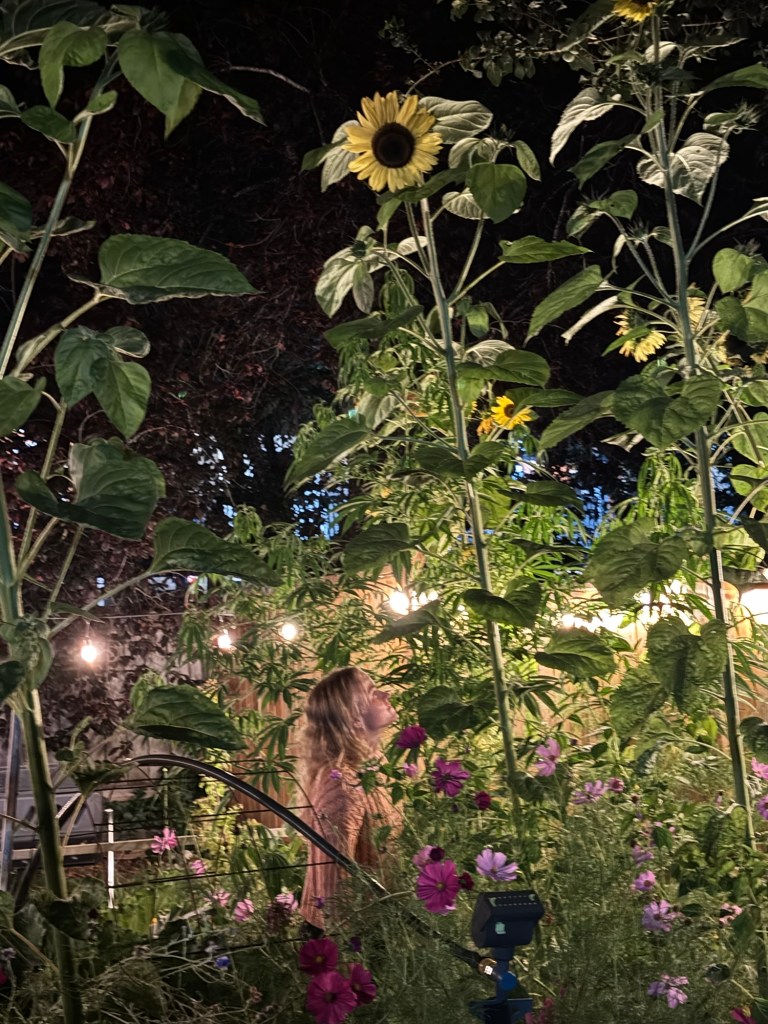
With irrigation we can also have the traditional raised bed gardens to grow our carrots and potatoes, salad greens, and flowers, but even these gardens can benefit from the microclimates created by the some tall trees for dappled shade at high noon. We can also mimic the coolness and humidity of forests by vining over a trellis where we want to grow our delicate greens that are prone to bolting in high heat.
Nearly every plant mentioned above, has several uses. For example D.Fir (Pseudotsuga menziesii) is the most sought after structural softwood on the planet, it has an edible cambium, the green pinecones can be added to a jar with sugar which will draw out the moisture creating a delicious pine syrup which is very similar in use and in flavour to maple syrup, the pine needles themselves are packed with vitamin C and make a great tea. It also has useful cousins that can be grown here which are grown commercially elsewhere for pine nuts. These include Korean pine (Pinus koraiensis) grown commercially in east Asia
Siberian pine (P. sibirica) grown commercially in Russia and Stone pine (P. pinea) grown commercially in Europe.

As gardeners we might also be interested to look at similar plants that come from analogue climates, places in the world with similar climates. For example, The Monkey Puzzle (Araucariaceae Araucaria araucana) of southern Chile and Western Argentina, which although taking 30 years to mature will eventually provide massive pine nuts that fall to the floor for easy harvesting.
Bringing it back locally though, two families seem to stand out as being seemingly everywhere once we become familiar with their characteristics. The Heathers (Ericacae) and the Roses (Rosacae) contain so many of the common plants around here that we could probably supplement our diet and grow some visually stimulating gardens by familiarizing ourselves with just these two perennial plant families alone. Hopefully you already recognize many of them, and are curious to learn that many other common landscape plants are from the same families as them.
Ericacae
Local:
Arbutis, Salal, Huckleberry, Mountain Huckleberry
Exotics that also thrive here:
Rhododendrons, Azaleas, Bluebeerries, Cranberries
Rosacae
Local: Nootka Roses, Crab Apple, Choke Cherry, Salmonberry, Thimbleberry, Trailing Blackberry, Wild Strawberry
Exotics that also thrive here:
Roses, Apples, Pears, Cherries, Plums, Apricots, Almonds, Raspberries, Strawberries
Hopefully this info inspires you to look a little closer at what’s around you and appreciate the natural abundance.
If you’d like any help identifying any of these plants, or would like to find out what’s on your property, or you’d like some assistance with the design and development of your property such that it continues to regenerate and grow more abundant each year, please don’t hesitate to get in touch.
 Regenerative Developments - Habitats For Thriving